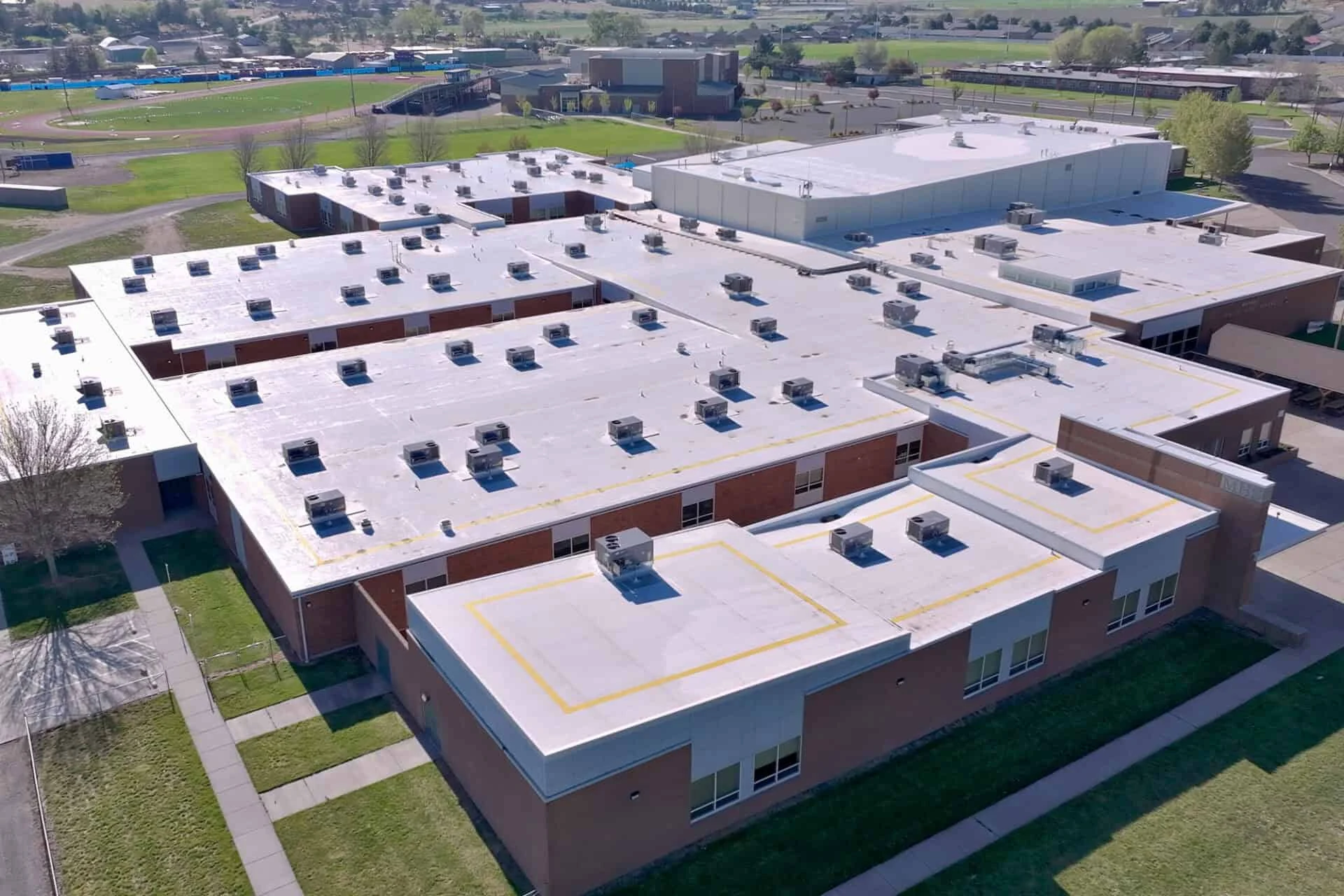
Food Processing Facility Roofing in Salem, OR
Commercial Project TypesServing Salem and the central Willamette Valley
Request a Roof Assessment
Commercial roofing in Salem, Oregon
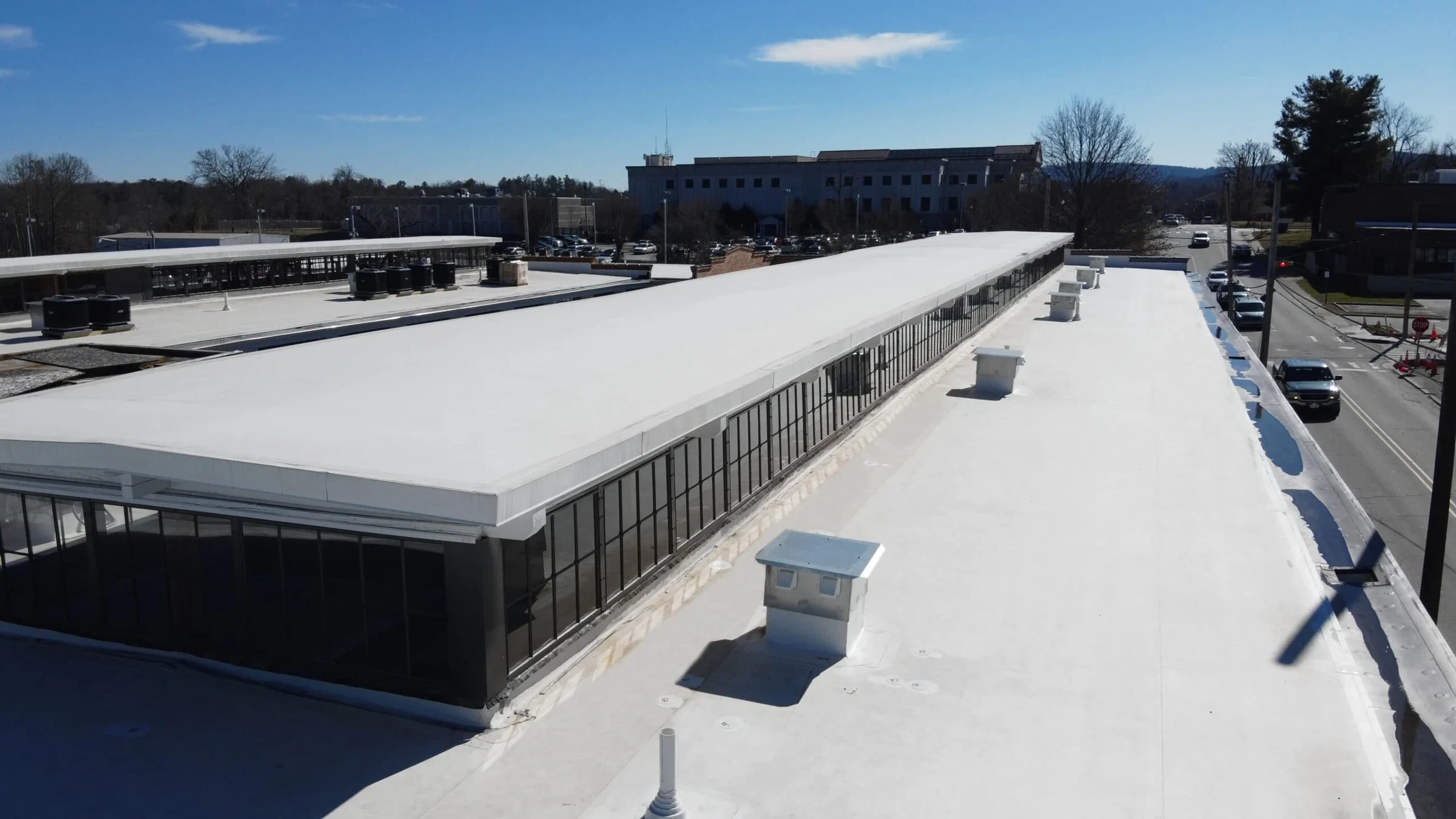
Food processing facility roofing in Salem, OR for cannery and cold-storage buildings, addressing steam, grease, wash-down moisture, and sanitation-driven scheduling.
Commercial Roofing Assessment Framework
Document
Membrane and seams
Trace
Drainage and water paths
Review
Flashings and penetrations
Compare
Repair, recover, coating, replacement
Plan
Access, staging, weather protection
Protect
Occupants, equipment, and operations
Close Out
Photos, details, records, priorities
Food Processing Facility Roofing in Salem, OR: Roofing Detail
Roofs That Sit Above Steam Lines, Freezers, and Wash-Down Floors
A food processing roof does its work above a building interior that's nothing like a typical warehouse. Steam from cook lines, condensation off freezer rooms, and grease-laden exhaust all end up pushing against the underside of the deck, and that's before the Willamette Valley's own rain load starts working the topside.
What's Different About a Processing Plant Roof
Canning, packing, and cold-storage buildings in the Salem area run mechanical systems that a typical office or retail roof never sees: steam kettles, blanchers, ammonia or glycol refrigeration racks, and high-volume exhaust hoods. Every one of those systems means a roof penetration, and every penetration is a place water can find its way in if the flashing wasn't detailed for the specific equipment sitting on top of it.
We treat processing roofs as mechanical-heavy from the start of the estimate. Curb heights, condensate drainage off rooftop units, and grease trap access all get scoped before we talk membrane, because the membrane choice matters less than whether the equipment interfaces were done right.
Interior Moisture Working Against the Deck From Below
Wash-down floors, steam tunnels, and freezer rooms all put moisture into the building envelope from the inside as much as the outside. A roof deck over a high-humidity process area can see condensation forming on the underside of the insulation even on a dry week, and if the vapor retarder was left out or damaged during a prior repair, that moisture has nowhere to go but into the insulation itself.
We check vapor drive direction as part of any reroof scope on a processing building, not as an afterthought. Getting that wrong means paying for a new membrane over insulation that's already wet and losing R-value from the day it goes back into service.
What we check before scoping a processing plant reroof:
- Curb height and flashing detail at every kitchen exhaust, refrigeration, and steam penetration
- Vapor retarder condition and direction relative to interior humidity load
- Condensate drain routing from rooftop refrigeration and HVAC units
- Grease accumulation pattern near fryer, smoker, or roaster exhaust discharge
- Coordination window with the plant's sanitation and production schedule
Sanitation Rules Change How We Schedule the Work
Food-grade facilities run on sanitation schedules and, often, third-party audit windows that a general contractor doesn't have to think about. Dust, debris, or open penetrations during active production can trigger a line shutdown that costs the owner more in lost production than the roofing work itself.
We plan demolition and hot work for shifts when the affected production line is down for cleaning or changeover, seal work areas from the interior with plastic and negative air where the process requires it, and keep foreign material exclusion protocols in mind on every penetration we open.
Grease, Exhaust, and Rooftop Corrosion
Rooftop exhaust from fryers, smokers, or roasters deposits grease film on the membrane and hardware around the discharge point, and that film breaks down some coating systems faster than the manufacturer's published wear data would suggest for a clean roof. Fasteners and curb flashing near exhaust stacks corrode faster too, especially with the valley's long wet season adding moisture to the mix.
We specify grease-resistant membrane or coating options near known discharge points and set a more frequent inspection interval for those zones specifically, rather than treating the whole roof as one uniform maintenance schedule.
Choosing Materials That Actually Hold Up in a Wash-Down Environment
Not every commercial roofing material performs the same way above a plant that runs steam and wash-down water daily. Some fastening systems corrode faster in a humid interior environment, and certain adhesives lose bond strength when the substrate underneath stays consistently damp from condensation rather than drying out between shifts.
We select fastener types, membrane attachment methods, and insulation facers based on what the specific plant's interior environment actually does to materials over time, rather than what a manufacturer's general spec sheet recommends for a standard commercial building.
Getting this wrong means watching a roof system fail years ahead of its rated service life, with the plant paying for a full replacement long before the membrane itself would normally need it on a drier building.
What Plant Managers Want to Know First
Can roofing work happen without shutting down the production line?
Usually yes, if we schedule around the plant's own sanitation or changeover windows. We work with the operations team to identify blocks of time when the affected line is already down so the roofing schedule doesn't create an additional shutdown.
Does grease from rooftop exhaust actually damage the roof membrane?
It can, over time. Grease film breaks down the surface of some membranes faster than normal weathering does, particularly near fryer or smoker exhaust discharge points. We address that with membrane selection and more frequent inspection in those specific zones.
What happens if we find moisture already trapped in the insulation?
We isolate the wet area, remove and replace only the affected insulation rather than the whole roof where the scope allows, and re-check the vapor retarder before closing it back up. Leaving wet insulation in place under a new membrane just moves the problem forward.
Do you coordinate with third-party food safety auditors?
We can schedule work to avoid active audit windows and keep the roof area contained during any audit period, but the audit relationship itself stays between the plant and its certifying body. We just work around the calendar they set.
Is a coating system a realistic option for an aging processing roof?
Sometimes, if the substrate is sound and the deck isn't holding water. A silicone or acrylic coating can extend a roof's service life for meaningfully less than a full tear-off, but we only recommend it after confirming the existing membrane and insulation are dry and structurally intact.
Assessment Priorities
Membrane condition, seams, flashings, penetrations, drains, scuppers, edge metal, rooftop equipment, traffic patterns, and visible moisture evidence are reviewed together before a repair, coating, recover, or replacement path is recommended.
Planning Around the Facility
Access, staging, noise, odor, delivery windows, weather protection, occupied spaces, interior protection, and daily dry-in procedures are planned for the way the commercial property must continue operating.
From Findings to a Clear Scope
Observed conditions are documented so building owners and facility teams can compare immediate repairs, maintenance priorities, system options, budget timing, and closeout requirements without losing sight of the building below the deck.
Ready to review the roof scope?
Commercial Project Types
1 of 2
Commercial Roofing Across the Salem Area